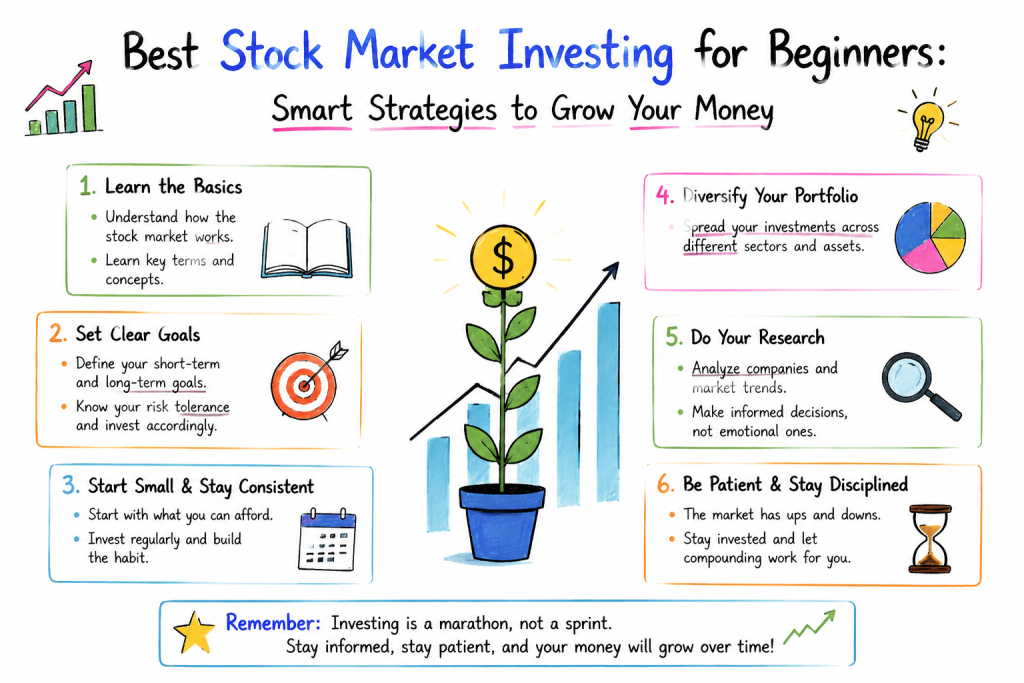
Introduction
The stock market has become one of the most effective ways to build long-term wealth, but for many beginners, it can feel confusing and intimidating. With countless investment options, financial terms, and market opinions available online, knowing where to begin is often the biggest challenge.
The good news is that successful investing doesn’t require predicting the market or having years of experience. It starts with learning the fundamentals, understanding how the market works, and developing the confidence to make informed decisions.
This guide is designed for anyone who wants to learn the stock market from the ground up. Whether you’re planning your first investment, exploring trading strategies, or simply improving your financial knowledge, you’ll find practical insights into stock market investing, research techniques, fundamental analysis, technical analysis, and IPO evaluation.
What Is Stock Market Education?
Stock market education is the process of understanding how financial markets operate and how investors make informed decisions. Rather than relying on tips or speculation, educated investors use research, analysis, and disciplined strategies to build wealth over time.
A strong foundation includes learning about:
- How stock markets work
- Different types of investments
- Risk and reward
- Portfolio diversification
- Company financials
- Market trends
- Investment psychology
- Long-term wealth creation
The more you understand these concepts, the more confident you’ll become in making investment decisions.
Understanding How the Stock Market Works
A stock market is a platform where investors buy and sell ownership shares of publicly listed companies. When you purchase a company’s stock, you become a shareholder and own a small portion of that business.
Stock prices constantly change based on factors such as:
- Company earnings
- Industry performance
- Economic conditions
- Government policies
- Global events
- Investor demand and supply
While daily price movements can seem unpredictable, long-term investors focus on the overall growth potential of strong businesses rather than short-term market fluctuations.
Stock Market for Beginners: Where Should You Start?
Starting your investment journey becomes much easier when you follow a structured learning path.
Learn Basic Financial Terms
Before investing, understand essential concepts like:
- Equity shares
- Dividends
- Market capitalization
- Bull and bear markets
- IPOs
- Portfolio diversification
Knowing these terms helps you better understand financial news and investment discussions.
Set Your Financial Goals
Every investor has different objectives. Some invest for retirement, while others save for a home, education, or financial independence. Defining your goals helps determine the right investment strategy.
Open Your Investment Account
You’ll need a Demat account to hold shares electronically and a trading account to buy or sell securities.
Begin with Small Investments
There’s no need to invest a large amount in the beginning. Starting small allows you to gain experience while minimizing risk.
Why Stock Market Education Matters
Learning before investing can significantly improve your financial decisions.
Better Investment Decisions
Education enables you to evaluate businesses based on facts instead of market rumors.
Improved Risk Management
Understanding investment risks helps you avoid emotional decisions during market volatility.
Long-Term Wealth Building
Knowledge encourages patience, consistency, and disciplined investing rather than chasing quick profits.
Greater Confidence
Investors who understand the market are more likely to stay committed to their financial plans even during uncertain times.
Learn Stock Market Through Fundamental Analysis
Fundamental analysis focuses on evaluating a company’s financial strength and future growth potential.
Instead of looking only at share prices, investors examine the actual business.
Some important indicators include:
Revenue Growth
Companies with consistently growing sales often have expanding business operations.
Net Profit
Increasing profits usually indicate strong management and sustainable business performance.
Debt Levels
Businesses with reasonable debt generally have greater financial stability.
Earnings Per Share (EPS)
EPS shows how much profit a company generates for each outstanding share.
Price-to-Earnings Ratio (P/E)
This ratio helps investors compare whether a stock appears fairly valued relative to its earnings.
Fundamental analysis is especially valuable for investors with a long-term perspective.
Technical Analysis for Beginners
While fundamental analysis evaluates businesses, technical analysis studies price movements and trading volume to identify market trends.
Some commonly used tools include:
Support and Resistance
These are price levels where buying or selling activity tends to increase.
Moving Averages
Moving averages smooth price fluctuations and help identify overall trends.
Relative Strength Index (RSI)
RSI measures market momentum and highlights whether a stock may be overbought or oversold.
Candlestick Charts
Candlestick patterns provide insights into short-term market sentiment and possible trend reversals.
Technical analysis is widely used by traders to improve entry and exit decisions.
How to Conduct Effective Stock Market Research
Successful investing depends on thorough research rather than assumptions.
Before investing in any company, consider the following:
- Understand the company’s business model.
- Review recent financial statements.
- Compare competitors within the same industry.
- Analyze management quality.
- Study future growth opportunities.
- Identify possible business risks.
- Review historical performance.
Well-researched investments often perform better over the long run because they are based on evidence instead of speculation.
IPO Analysis: What Every Beginner Should Know
An Initial Public Offering (IPO) allows a private company to offer its shares to the public for the first time.
Although IPOs can generate excitement, every offering should be carefully evaluated before investing.
Important areas to review include:
- Company background
- Business model
- Revenue and profit growth
- Industry outlook
- Competitive advantages
- Valuation
- Risk disclosures
- Future expansion plans
Reading the company’s prospectus helps investors understand both opportunities and risks.
Common Mistakes New Investors Should Avoid
Every beginner makes mistakes, but avoiding the most common ones can save both money and confidence.
Some examples include:
- Investing without research
- Following social media stock tips
- Trying to predict short-term market movements
- Investing without diversification
- Ignoring company fundamentals
- Panic selling during market corrections
Developing disciplined investing habits is more important than trying to earn quick profits.
Tips to Become a Smarter Investor
Building investing skills is a continuous journey.
Consider these practical habits:
- Read financial news regularly.
- Study company annual reports.
- Keep learning about investing strategies.
- Review your portfolio periodically.
- Stay focused on long-term financial goals.
- Avoid making emotional investment decisions.
Over time, these habits can significantly improve your investing confidence and decision-making.
Frequently Asked Questions
Can beginners invest in the stock market?
Yes. With proper education and a long-term mindset, beginners can start investing successfully by learning the fundamentals before committing significant capital.
How long does it take to learn stock market investing?
Basic concepts can be learned within a few weeks, but becoming a skilled investor requires continuous learning and practical experience.
Is fundamental analysis better than technical analysis?
Both have different purposes. Fundamental analysis helps identify quality businesses, while technical analysis assists with understanding market trends and timing.
How much money should I invest initially?
Start with an amount you’re comfortable investing while you continue learning. Consistency matters more than investing a large sum at once.
Why is stock market research important?
Research helps investors understand a company’s strengths, risks, and growth potential, making investment decisions more informed and less emotional.
Conclusion
Building wealth through the stock market doesn’t begin with buying your first stock—it begins with education. By understanding how markets function, learning to analyze companies, researching investment opportunities, and developing disciplined investing habits, beginners can make smarter financial decisions with greater confidence.
Remember, successful investing is not about chasing trends or making quick profits. It’s about continuous learning, careful research, patience, and staying committed to your long-term financial goals. With the right stock market education, every investor can build a stronger foundation for future financial success.
