1. Introduction
Navigating the vibrant, bustling streets of India offers an adventure unlike any other. For travelers looking to experience the country at their own pace, renting a vehicle has become the go-to solution. While the topic of a “Car Rental Safety Checklist for First-Time Users” is widely searched by those looking to drive four-wheelers, the two-wheeler market dominates Indian roads. Whether you are searching for a self-drive vehicle rental India offers or you specifically want to rent a scooter in India, knowing the safety protocols and rental guidelines is crucial.
India is a vast country with diverse terrains, ranging from the smooth highways connecting Delhi and Jaipur to the winding coastal roads of Goa. For first-time travelers, daily commuters, and budget backpackers, understanding the dynamics of vehicle rental in India is the key to a stress-free journey. This comprehensive guide will serve as your ultimate safety checklist and operational manual. We will focus deeply on how to successfully rent a bike in India, ensuring you have all the necessary information regarding safety, documentation, vehicle types, and costs to make your trip memorable and secure.
2. Why Renting a Bike in India Is a Smart Choice
Choosing a bike rental in India over traditional public transport or expensive cabs is a highly strategic decision for both locals and tourists. India’s metropolitan cities like Mumbai, Bangalore, and Hyderabad are notorious for their heavy traffic during peak hours. A two-wheeler allows you to maneuver through congested streets with agility, saving you precious time.
Furthermore, a self-drive bike rental provides unparalleled freedom. You are not bound by bus schedules, train timings, or the availability of a taxi driver. If you spot a hidden beach in Goa or an ancient monument on the outskirts of Pune, you can simply change your route and explore. Economically, an affordable bike rental India offers will drastically cut down your travel expenses, leaving you with more budget to spend on experiences, food, and accommodation. For those exploring on a budget, this level of independence combined with cost-effectiveness makes renting a two-wheeler the absolute smartest choice for ground transportation.
3. Who Should Rent a Bike in India?
The beauty of a two-wheeler rental India provides is its universal appeal. The demographic of renters is incredibly broad, encompassing various types of individuals:
- First-Time Travelers and Tourists: For foreign and domestic tourists wanting an unfiltered experience of the country, a bike rental for tourists is highly recommended. It allows you to immerse yourself in the local culture intimately.
- Students and Budget Backpackers: College students exploring cities like Pune or Bangalore, and backpackers navigating the coastal stretches of Chennai, will find that a bike on rent in India fits perfectly into a tight budget.
- Working Professionals and Daily Commuters: Individuals relocating to new cities for work often rely on rental subscriptions before purchasing their own vehicle. It offers a reliable daily commute without the immediate financial burden of a down payment.
- Adventure Seekers: Enthusiasts looking to conquer the rugged terrains of the Himalayas or the Western Ghats frequently opt for a specialized motorcycle rental India provides, ensuring they have the right machinery for challenging landscapes.
4. Benefits of Renting a Bike for First-Time Travelers
For someone stepping into the Indian traffic ecosystem for the first time, renting a two-wheeler might seem daunting, but the benefits far outweigh the initial hesitation.
Firstly, travel in India by bike offers total flexibility. You dictate the itinerary. If you wish to witness the sunrise at Nandi Hills near Bangalore, you can start your journey at 4:00 AM without worrying about booking a cab.
Secondly, the parking convenience is unmatched. Finding a parking spot for a car in the crowded markets of Delhi’s Chandni Chowk or Kolkata’s New Market can take hours. A scooter or a bike can be parked in compact spaces with ease.
Thirdly, it allows for a highly localized experience. Riding through the streets exposes you to the sights, sounds, and aromas of the city, stripping away the barrier of a closed air-conditioned car. You can easily pull over to grab a cup of chai from a local vendor or ask locals for directions, making your trip much more interactive and engaging.
5. Types of Bikes You Can Rent in India
The Indian rental market is vast and caters to every kind of rider. When consulting a first-time bike rental guide, it is essential to know which machine suits your specific travel needs.
Scooters
Scooters are gearless, lightweight, and incredibly easy to handle. They are the top choice for navigating crowded urban centers or for short-distance sightseeing. If you are in Goa hopping between beaches, or in Jaipur visiting local bazaars, a scooter is your best companion. They typically offer excellent storage space under the seat for your daypack or shopping bags.
Commuter Bikes
These are standard, geared motorcycles with engine capacities ranging from 100cc to 150cc. They are highly fuel-efficient and comfortable for city riding. Commuter bikes are ideal for budget travelers covering moderate distances in cities like Hyderabad or Chennai, offering a great balance between cost and performance.
Sports Bikes
For those who prioritize speed, performance, and aggressive styling, sports bikes are available in major metropolitan cities. These bikes, generally ranging from 200cc to 400cc, are meant for smooth highways and speed enthusiasts. However, they require an experienced rider and are not recommended for heavily congested traffic.
Adventure Bikes
If your itinerary includes off-roading, mountain passes, or uneven terrains, adventure bikes are mandatory. Equipped with long-travel suspension, higher ground clearance, and robust build quality, these bikes are the absolute necessity for trips starting from North Indian plains and heading into the mountains.
Cruiser Motorcycles
Cruisers, characterized by a relaxed riding posture and heavy build, are the undisputed kings of the Indian highway. Brands like Royal Enfield dominate this category. If you are planning a long interstate journey—such as riding from Mumbai to Goa—a cruiser provides the stability and seating comfort required for hours on the saddle.
Electric Bikes
With a growing emphasis on sustainability, electric bikes and scooters are rapidly entering the rental fleets of major cities like Delhi and Bangalore. They are silent, completely eco-friendly, and cost practically nothing to run. They are best suited for short intra-city commutes due to range limitations and the need for charging infrastructure.
6. How to Choose the Right Bike for Your Trip
Selecting the correct vehicle is a vital part of your car rental safety checklist or bike rental preparation. First, assess the terrain. If you are riding in a city with heavy stop-and-go traffic, a gearless scooter is the most practical and least tiring option. If you are hitting the highway, choose a cruiser for stability.
Second, consider your riding experience. Do not rent a heavy 500cc motorcycle if you have only ever ridden lightweight commuter bikes. Always choose a bike you can easily balance and maneuver.
Third, factor in the luggage. If you are backpacking, a motorcycle might require you to wear your heavy bag or tie it to the back with bungee cords, which can affect balance. A scooter offers under-seat storage and a footboard for lighter bags, but lacks the power for heavy loads on steep inclines. Choose based on what you are carrying and where you are going.
7. Documents Usually Needed to Rent a Bike in India
To legally secure a self-drive vehicle rental India mandates specific documentation. Rental agencies are strictly regulated, and you must carry the following:
Valid Driving License
This is non-negotiable. Indian citizens require a valid two-wheeler driving license (with gear or without gear, depending on the rental). Foreign tourists must provide their domestic driving license along with a valid International Driving Permit (IDP) endorsed for two-wheelers.
Government ID Proof
You will need an original government-issued identity card. For Indian nationals, an Aadhar Card, Voter ID, or Passport is accepted. For international tourists, an original Passport and a valid Indian Visa are mandatory.
Address Proof (if applicable)
Some local rental companies may ask for local address proof, especially if you are renting for an extended monthly period. This could be a hotel booking confirmation, a letter from your hostel, or a local utility bill if you are a resident.
Security Deposit Requirements
While some platforms offer zero-deposit policies, many independent vendors still require a refundable security deposit. This amount is usually blocked on your credit card or taken via digital payment and refunded upon the safe return of the vehicle.
8. Things to Check Before Renting a Bike
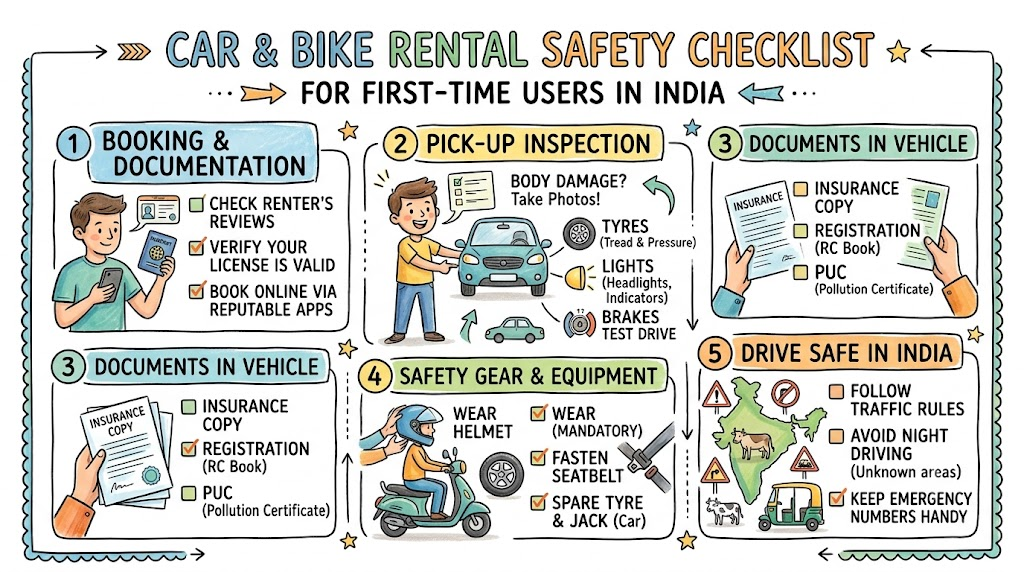
Just as you would meticulously follow a car rental safety checklist, renting a two-wheeler requires a thorough pre-ride inspection. Protect yourself from unwarranted damage charges by checking the following:
Vehicle Condition
Do a comprehensive walk-around of the bike in broad daylight. Look for existing scratches, dents, or broken parts. Check the headlights, taillights, indicators, and the horn. Start the engine to ensure there are no unusual sounds. Take photographs or a continuous video of the bike from all angles before riding away.
Fuel Policy
Understand the fuel policy clearly. Most rentals operate on a “tank-to-tank” basis (you receive it full and return it full) or ask you to return it with the same amount of fuel it had when you picked it up. Check the fuel gauge before leaving.
Insurance Coverage
Verify that the rental vehicle has active commercial insurance. Ask the vendor about the terms of the insurance—what is the maximum liability on your end if the vehicle is damaged or stolen? Knowing your financial liability is a crucial safety step.
Mileage Limits
Many rental agreements come with a daily mileage cap (e.g., 100 kilometers per day). If you exceed this limit, you will be charged an extra fee per kilometer. Calculate your expected travel distance and choose a plan with unlimited mileage if you plan on taking a long road trip.
Helmet Availability
In India, the law mandates helmets for both the rider and the pillion. Check if the rental agency provides complimentary helmets. Ensure the helmet fits snugly, has a clear visor, and the chin strap locks securely.
Rental Agreement Terms
Read the fine print. Look for clauses regarding late return penalties, breakdown assistance, and geographical restrictions (some vendors do not allow you to take the bike across state borders without prior permission).
9. Safety Tips for Riding a Rental Bike in India
Safety should always be the priority. Indian roads are dynamic, and defensive driving is absolutely essential.
Follow Traffic Rules
Adhere strictly to traffic signals, lane disciplines, and one-way streets. Traffic police in major cities like Kolkata and Delhi rely heavily on CCTV cameras to issue digital fines (e-challans). Any fine incurred during your rental period will be billed directly to you.
Wear a Helmet
Never ride without a high-quality helmet. Even if locals in some smaller towns seem to ignore this rule, it is illegal and highly dangerous. If your rental agency provides a damaged helmet, insist on a replacement or purchase a basic, certified one yourself.
Avoid Overspeeding
Animals (such as stray dogs and cows), pedestrians, and unannounced speed breakers can appear suddenly on Indian roads. Maintain a moderate speed that allows you to brake safely without losing control of the vehicle.
Check Weather and Road Conditions
During the Indian monsoon season (June to September), roads can become incredibly slippery, and potholes may be hidden under waterlogged streets. If you are riding in a coastal city like Mumbai or Chennai during the rains, ride slowly, avoid sudden braking, and ensure your tires have sufficient tread depth.
Keep Emergency Contacts Handy
Save the contact number of the rental agency’s breakdown assistance team, the local police (Dial 112 for national emergency), and an ambulance service. It is also wise to share your live location with a friend or family member if you are embarking on a long solitary ride.
10. Cost of Bike Rental in India
Pricing for vehicle rental in India is highly competitive and varies based on the city, the season (peak tourist season vs. monsoon), and the duration of the rental. Based on current market rates in 2026, here are the average daily rental prices:
- Scooters: Highly affordable, ranging from ₹300 to ₹500 per day. Monthly plans bring this daily cost down significantly.
- Commuter Bikes: Slightly more expensive due to better fuel economy and larger engines, typically costing between ₹400 and ₹700 per day.
- Premium Bikes: Cruisers and sports bikes like Royal Enfield or KTM models range from ₹1,000 to ₹1,800 per day.
- Adventure Bikes: High-end off-roading machines require a higher investment, usually starting from ₹1,500 and going up to ₹2,500+ per day.
11. Common Mistakes First-Time Travelers Should Avoid
When consulting a first-time bike rental guide, learning from the mistakes of others will save you time, money, and stress.
The most common mistake is failing to document the bike’s initial condition. If you do not have photographic proof of a pre-existing dent, the agency may hold you liable for it.
Another frequent error is ignoring local traffic patterns. Assuming that everyone will follow standard right-of-way rules can lead to accidents. Always practice defensive riding.
Travelers also frequently forget to secure their belongings. Do not leave valuables in the under-seat storage of a scooter when parked in an isolated area. Finally, do not try to squeeze your rental bike into a tight schedule. Give yourself buffer time to deal with unexpected traffic, minor mechanical delays, or simply stopping to enjoy a scenic view.
12. Bike Rental vs Public Transport vs Taxi
To truly understand why renting a two-wheeler is advantageous, it helps to compare it directly with other modes of transport available in India.
| Feature | Bike Rental | Public Transport (Bus/Train) | Taxi / Cab |
| Cost | Very Low (High value for money) | Extremely Low | High (Surge pricing applies) |
| Convenience | High (Door-to-door access) | Low (Fixed routes and stops) | Moderate (Wait times can vary) |
| Flexibility | Maximum (Go anywhere, anytime) | Minimum (Strict schedules) | Moderate (Dependent on driver) |
| Comfort | Moderate (Exposed to weather) | Low (Often crowded) | High (AC, relaxed seating) |
| Travel Experience | Immersive and adventurous | Authentic local experience | Isolated from the surroundings |
| Best Use Cases | Exploring cities, coastal roads, hills | Budget commuting between major hubs | Airport transfers, family travel |
13. How MotoShare India Can Help Travelers
When looking for a reliable partner for your journey, MotoShare India (operating under the global MotoShare colombia brand) stands out as the ultimate vehicle sharing platform in India. Whether you need a car rental safety checklist executed perfectly or a premium motorcycle for a weekend getaway, MotoShare offers a flawless experience.
- Easy Online Booking: The motoshare.co platform allows you to browse, compare, and book your desired vehicle entirely online in a matter of minutes.
- Wide Range of Vehicles: From economical gearless scooters perfect for Goa’s narrow lanes to heavy-duty cruisers for a Delhi to Rajasthan road trip, the fleet is vast and diverse.
- Transparent Pricing: With MotoShare India, what you see is what you pay. There are zero hidden booking fees, unexpected commissions, or surprise charges at the time of pickup.
- Verified Vehicle Owners: Safety is guaranteed because MotoShare partners exclusively with verified rental agencies and trusted local vehicle owners.
- Flexible Rental Options: Whether you need a scooter for three hours to run errands in Bangalore or a motorcycle for a 30-day cross-country expedition, MotoShare provides flexible hourly, daily, and monthly plans.
- Availability Across Indian Cities: With an expansive network, you can reliably find a MotoShare vehicle in major hubs including Mumbai, Pune, Jaipur, Hyderabad, Chennai, Kolkata, and more.
14. FAQs
1. Can tourists rent a bike in India?
Yes, both domestic and international tourists can easily rent a bike. Foreign tourists simply need to provide a valid Passport, an Indian Visa, and an International Driving Permit (IDP) alongside their home country’s driving license.
2. Is an international driving permit required?
Yes, if you are a foreign national, an International Driving Permit (IDP) that explicitly covers two-wheelers is legally mandatory to ride on Indian roads.
3. How much does bike rental cost in India?
The cost varies by vehicle type. Basic scooters start around ₹300 per day, commuter bikes range from ₹400 to ₹700, and premium cruisers or adventure bikes cost between ₹1,000 and ₹2,500+ per day.
4. Are helmets provided?
Reputable rental platforms like MotoShare provide at least one complimentary helmet with every booking. A second helmet for a pillion rider can usually be requested, sometimes for a small additional fee.
5. Can I rent a bike without a deposit?
Yes, certain modern rental platforms and select vendors on MotoShare offer zero-deposit bookings. However, many traditional local agencies still require a refundable security deposit.
6. What happens if the bike breaks down?
Most established rental companies provide 24/7 roadside assistance. If the breakdown is due to a mechanical failure not caused by rider negligence, the company will either repair the vehicle on-site or provide a replacement.
7. Can I take the bike to another city?
This depends on the rental agreement. Some vendors permit interstate travel provided the vehicle has an All-India commercial permit, while others restrict the bike to city limits. Always verify the geographical boundaries before booking.
8. What is the minimum age to rent a bike?
The legal driving age in India is 18 years. Most rental agencies strictly enforce an 18+ policy for renting gearless and geared vehicles, provided the renter has a valid driving license. Some companies may require the rider to be 21+ for high-end sports or adventure bikes.
9. Is fuel included in the rental price?
No, fuel is almost never included in the daily rental price. You will typically receive the bike with enough fuel to reach the nearest petrol pump and are expected to return it at a similar level.
10. Are rental bikes insured?
Yes, legally registered commercial rental bikes come with mandatory third-party insurance. Many premium rental services also offer comprehensive insurance, though the renter may still be liable for a deductible in case of major damage. Always check the insurance clause in your rental agreement.
15. Conclusion
Navigating the vibrant landscapes of India requires preparation, awareness, and the right mode of transportation. By adhering to this car and bike rental safety checklist, first-time users can confidently bypass the anxieties of transportation and focus entirely on the incredible experiences the country has to offer. From verifying your documents and inspecting the vehicle to understanding local traffic etiquette, a little diligence guarantees a smooth ride.
When you are ready to hit the road—whether you are exploring the historical monuments of Jaipur, commuting through the IT corridors of Bangalore, or cruising the coastlines of Chennai—make sure you book with a platform that prioritizes your safety and convenience.
Ready to start your Indian adventure? Skip the endless negotiations and hidden fees. Book your perfectly maintained two-wheeler or car today with MotoShare colombia. Visit motoshare.co to explore our wide fleet, transparent pricing, and verified rentals across India’s top destinations. Ride safe, ride smart, and let MotoShare drive your journey!
