Introduction
Traveling around Colombia becomes easier when you have the freedom to choose your own route, departure time, stops, and travel schedule. Public transportation is useful in major cities, but it may not always provide the flexibility needed for airport transfers, family outings, weekend road trips, business travel, or visits to destinations outside urban centers.
Peer-to-peer car rental offers an alternative to traditional rental companies. Instead of renting only from a large commercial fleet, travelers can book vehicles made available by local owners through a vehicle-sharing platform. This model can provide a wider range of cars, flexible rental durations, convenient pickup options, and prices suited to different budgets.
For local travelers, students, working professionals, tourists, backpackers, families, and daily commuters, peer-to-peer car rental in Colombia can make transportation more personal and practical. A traveler may need a compact car for moving around Bogotá, an SUV for a road trip near Medellín, or a larger vehicle for a family journey from Cali.
This guide explains how peer-to-peer vehicle rental works, who can benefit from it, what documents may be required, how rental prices are calculated, and what travelers should check before accepting a vehicle. It also explains how MotoShare Colombia can help connect travelers with suitable rental vehicles through a convenient booking experience.
What Is Peer-to-Peer Car Rental?
Peer-to-peer car rental is a vehicle-sharing model in which individual car owners make their vehicles available to other people for temporary use. A digital platform generally helps vehicle owners and renters find each other, review rental information, communicate, complete booking steps, and manage the rental process.
The model is similar to other sharing-economy services. A vehicle owner can earn income when the car is not being used, while a traveler gains temporary access to a vehicle without purchasing one.
Depending on platform policies and local availability, a renter may be able to book a vehicle for:
- A few hours
- One full day
- A weekend
- A business trip
- A holiday
- A weekly rental
- A longer local requirement
Peer-to-peer rental may include compact cars, sedans, SUVs, premium vehicles, electric cars, motorcycles, scooters, and other self-drive vehicles. Availability depends on the city, participating owners, platform coverage, and applicable regulations.
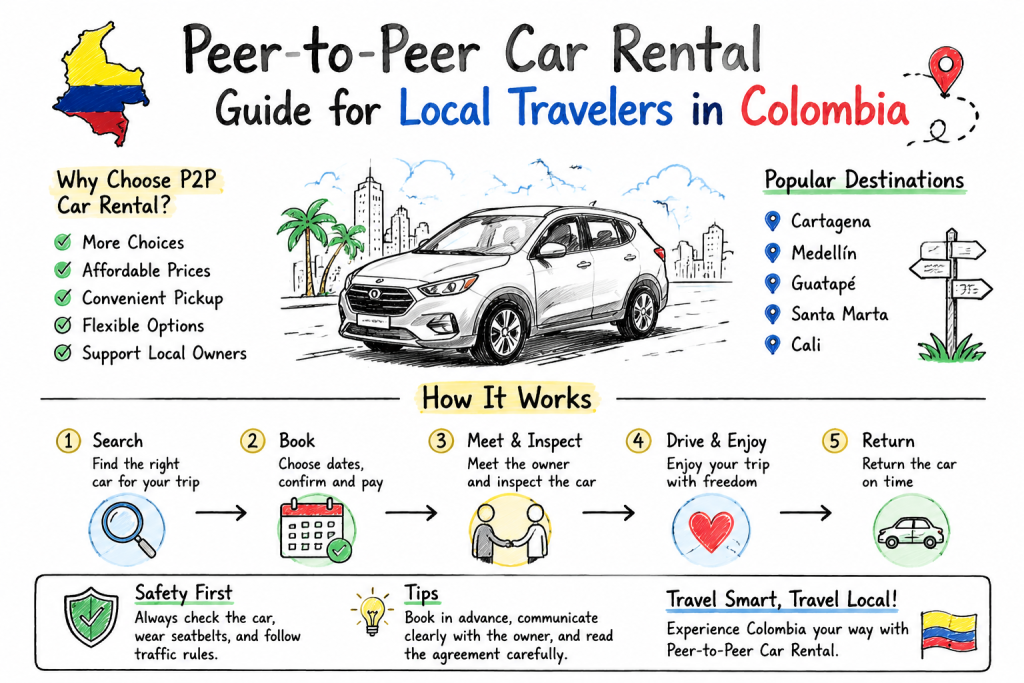
How Peer-to-Peer Car Rental Works
Although the exact process can vary, most peer-to-peer vehicle rental bookings follow a few basic steps.
1. Search for a Vehicle
The renter enters the city, pickup location, travel date, rental duration, and preferred vehicle category. The platform displays available vehicles that match the selected criteria.
2. Compare Available Options
Travelers can compare vehicles based on:
- Rental price
- Vehicle model
- Seating capacity
- Transmission type
- Fuel type
- Pickup location
- Mileage allowance
- Owner requirements
- Deposit amount
- Rental terms
A lower price should not be the only deciding factor. Vehicle condition, agreement terms, insurance arrangements, and owner reliability should also be considered.
3. Submit Documents
The renter may be asked to provide identification and a valid driving licence. International visitors may need additional documents, depending on their nationality, licence type, rental duration, and local legal requirements.
4. Confirm the Booking
The booking is confirmed after the required information, payment, deposit, and verification steps are completed. Travelers should review cancellation rules and pickup instructions before paying.
5. Inspect and Collect the Vehicle
At pickup, the renter and owner should inspect the vehicle together. Existing scratches, dents, warning lights, fuel level, tyre condition, and mileage should be documented.
6. Use and Return the Vehicle
The renter uses the vehicle according to the rental agreement and returns it at the agreed location and time. Fuel, cleanliness, distance limits, tolls, traffic fines, and late-return charges may be settled according to the stated terms.
Why Peer-to-Peer Car Rental Is a Smart Choice in Colombia
Colombia has large cities, mountain roads, coastal destinations, historic towns, rural communities, business districts, and natural attractions. The right rental vehicle can help travelers reach places that may be difficult or time-consuming to access through fixed public transport routes.
Greater Travel Flexibility
A self-drive vehicle allows travelers to start early, stop for food, change routes, visit several attractions in one day, and return according to their own schedule.
For example, a traveler staying in Medellín may want to visit Guatapé, explore nearby viewpoints, stop at local restaurants, and return in the evening. A rental car offers more scheduling freedom than relying on multiple transport connections.
More Vehicle Choices
Traditional rental companies may offer standardized fleets. Peer-to-peer platforms can provide a broader selection of vehicles owned by local residents.
Depending on availability, travelers may find:
- Economical city cars
- Automatic vehicles
- Family sedans
- SUVs
- Seven-seat vehicles
- Pickup trucks
- Premium cars
- Motorcycles and scooters
- Electric or hybrid vehicles
Potentially Affordable Pricing
Peer-to-peer car rental may offer competitive prices because individual owners can set rates according to demand, vehicle type, availability, and rental duration.
Travelers should compare the full amount rather than only the advertised daily price. Deposits, insurance, cleaning costs, delivery charges, platform fees, mileage costs, and late fees can affect the final price.
Convenient Local Pickup
Some vehicles may be available close to residential areas, hotels, airports, universities, offices, or transport terminals. Local pickup can reduce the time and cost involved in reaching a traditional rental office.
Support for Local Vehicle Owners
The peer-to-peer model allows vehicle owners to earn from vehicles that might otherwise remain unused. This creates a more community-based form of mobility and makes better use of existing transportation resources.
Who Should Use Peer-to-Peer Car Rental?
Peer-to-peer car rental can serve many types of travelers and local residents.
First-Time Travelers
Visitors unfamiliar with local transport systems may prefer having one vehicle throughout their trip. However, they should study traffic rules, parking practices, road conditions, and local driving habits before starting.
Local Tourists
Colombian residents exploring another city or region can use a rental car for weekend trips, family visits, cultural tourism, or nature travel.
Students
Students may rent a car occasionally for moving accommodation, attending events, completing group projects, or traveling with friends. Splitting the rental and fuel costs among passengers may make the trip more manageable.
Working Professionals
Professionals may need a temporary vehicle for client meetings, airport pickups, project visits, conferences, or work in another city.
Families
Families often need luggage space, child seating arrangements, air conditioning, and comfortable seating. A suitable rental car may be easier than changing buses or booking several taxis.
Backpackers and Budget Travelers
Budget travelers can compare compact vehicles, older models in good condition, shared travel costs, and flexible pickup locations. They must still avoid choosing an unsuitable vehicle only because it has the lowest price.
People Without a Personal Vehicle
Local residents may need a temporary car for a medical appointment, family event, shopping trip, home relocation, or special journey without wanting the expense of owning a vehicle.
Benefits for First-Time Renters
Renting through a peer-to-peer platform can be simple when travelers prepare carefully.
Control Over the Journey
Travelers can select their preferred departure time and itinerary instead of organizing the trip around bus schedules or taxi availability.
Privacy
A private vehicle offers personal space for conversations, luggage, work calls, children, and rest stops.
Easier Group Travel
When several people travel together, one car can be more practical than arranging separate tickets or multiple ride-hailing vehicles.
Access to Destinations Outside City Centers
Some attractions, rural accommodations, beaches, mountain towns, and natural areas have limited public transport. A rental vehicle can improve access, although travelers should always confirm road suitability.
Choice Based on the Trip
A city traveler may choose a small automatic car, while a family may need an SUV or larger vehicle. The ability to compare different categories makes it easier to match the vehicle to the journey.
Types of Vehicles You Can Rent
Vehicle availability varies by city and owner participation. Common categories may include the following.
Compact Cars
Compact cars are suitable for urban driving, solo travel, couples, and short trips. They are usually easier to park and may consume less fuel than larger vehicles.
They are often suitable for:
- Bogotá city travel
- Short business trips
- Airport transfers
- Daily commuting
- Shopping and appointments
Sedans
Sedans generally offer more boot space and passenger comfort than small city cars. They may be suitable for longer highway journeys, small families, or professional travel.
SUVs
SUVs can provide more luggage space, higher seating, and better comfort for groups. However, not every SUV is designed for off-road driving. Renters should confirm the vehicle’s capabilities before using it on difficult terrain.
Seven-Seat and Family Vehicles
Larger vehicles are useful for family groups, business teams, and travelers carrying several bags. Travelers should check whether all seats remain usable when the luggage area is full.
Pickup Trucks
Pickup trucks may be required for equipment, rural travel, work-related journeys, or certain road conditions. Their fuel consumption and driving characteristics may differ significantly from those of compact cars.
Premium Vehicles
Premium cars may be selected for corporate travel, weddings, celebrations, formal meetings, or travelers seeking greater comfort. They normally involve higher rental rates and deposits.
Electric and Hybrid Cars
Electric and hybrid vehicles may reduce fuel consumption and provide a quieter driving experience. Before booking, travelers should review charging access, driving range, charging time, and return requirements.
Motorcycles and Scooters
MotoShare Colombia may also support broader vehicle-sharing requirements, including motorcycles or scooters where available. A two-wheeler rental can be useful for short urban travel, but riders must have the appropriate licence, safety equipment, and experience.
How to Choose the Right Car for Your Trip
The best vehicle is not necessarily the largest, newest, or cheapest. It is the one that safely meets the needs of the journey.
Consider the Number of Travelers
Count passengers, children, luggage, backpacks, and any special equipment. A five-seat car may feel crowded when every passenger has a large suitcase.
Review the Route
Urban roads, highways, mountain routes, rural roads, and unpaved sections may require different vehicle characteristics. Ask the owner whether the vehicle is suitable for the planned route.
Choose the Transmission Carefully
Travelers who are comfortable only with automatic transmission should not book a manual vehicle to save money. Driving an unfamiliar transmission in heavy traffic or on steep roads can be stressful and unsafe.
Check Fuel Efficiency
Fuel can be a major part of the total travel budget. Compare estimated fuel consumption, trip distance, and local fuel costs before booking.
Think About Parking
A smaller car may be easier to park in busy neighborhoods, commercial areas, historic districts, and narrow streets.
Check Air Conditioning and Comfort
For warm destinations such as Cartagena, Barranquilla, Santa Marta, or Cali, working air conditioning may be an important requirement.
Review Luggage Capacity
Vehicle photographs may not clearly show usable boot space. Ask for confirmation when traveling with multiple bags, sports equipment, child equipment, or work materials.
Documents Usually Needed to Rent a Car in Colombia
Document requirements can vary between platforms, vehicle owners, insurance arrangements, and renter profiles. Common requirements may include the following.
Valid Driving Licence
The renter must generally hold a valid licence appropriate for the vehicle category. The licence should remain valid for the entire rental period.
Foreign visitors should confirm whether their domestic licence is accepted and whether an International Driving Permit is required or recommended for their circumstances.
Government-Issued Identification
A national identity document or passport may be requested to confirm the renter’s identity.
Address or Contact Information
Some platforms or owners may request a current residential address, local accommodation details, telephone number, email address, or emergency contact.
Payment Method
A supported payment method may be needed for the booking amount, deposit, or additional charges. The name associated with the payment method may need to match the verified renter.
Security Deposit
A refundable deposit may be collected to cover agreed liabilities such as damage, missing fuel, cleaning, late return, unpaid tolls, or traffic penalties.
Travelers should ask:
- How much is the deposit?
- When is it collected?
- How is it held?
- When is it released?
- What deductions are permitted?
- What evidence is provided for deductions?
Things to Check Before Accepting a Rental Car
A complete inspection protects both the renter and vehicle owner.
Vehicle Condition
Walk around the vehicle and document:
- Scratches
- Dents
- Cracked lights
- Windscreen damage
- Wheel damage
- Tyre wear
- Interior stains
- Dashboard warning lights
Take clear photographs or videos at pickup and return. Ensure the time, location, fuel level, and mileage are recorded.
Fuel Policy
Common fuel policies may require the renter to return the vehicle with the same fuel level provided at pickup. Confirm the exact requirement and whether refueling charges apply.
Insurance and Protection
Do not assume that every type of loss is covered. Ask what insurance or protection applies to:
- Collision damage
- Theft
- Third-party liability
- Windscreen damage
- Tyres and wheels
- Interior damage
- Roadside assistance
Also confirm the renter’s financial responsibility, deductible, exclusions, and reporting procedure.
Mileage Limits
Some rentals include unlimited mileage, while others have a daily or total distance allowance. Additional distance may be charged separately.
Maintenance Condition
Check the tyres, lights, indicators, mirrors, brakes, horn, wipers, fluid levels, and spare-wheel equipment. Report any concern before departure.
Rental Agreement
Read the agreement carefully. Pay attention to:
- Authorized drivers
- Permitted travel areas
- Cross-city travel
- Border restrictions
- Late-return fees
- Cleaning requirements
- Smoking rules
- Pet policies
- Cancellation conditions
- Breakdown procedures
- Accident reporting
- Traffic fines and tolls
Emergency Equipment
Confirm whether the vehicle includes legally required and practically useful emergency equipment. Requirements may differ according to local law and vehicle type.
Safety Tips for Driving a Rental Car
Follow Traffic Rules
Observe speed limits, road signs, lane restrictions, parking regulations, and local traffic controls. Traffic fines may remain the renter’s responsibility even when they are received after the rental ends.
Avoid Distracted Driving
Do not operate a phone while driving. Set navigation before beginning the journey or ask a passenger to manage directions.
Check Weather and Road Conditions
Mountain routes can be affected by rain, fog, landslides, road repairs, or reduced visibility. Coastal and rural routes may also have seasonal challenges.
Avoid Driving While Tired
Long-distance travel should include rest stops. Do not continue driving when sleepy, unwell, or unable to concentrate.
Keep Emergency Information Available
Save the contact details of the owner, platform support, roadside-assistance provider, insurer, and local emergency services.
Do Not Exceed the Vehicle’s Capabilities
A normal city car should not be taken onto unsuitable off-road routes. Misuse may create safety risks and invalidate protection.
Plan Fuel or Charging Stops
For long journeys, identify fuel stations or charging points before departure. This is especially important in rural areas or when using an electric vehicle.
Average Peer-to-Peer Car Rental Costs in Colombia
Rental prices vary by city, season, vehicle age, demand, owner, booking duration, mileage allowance, and included protection. The following ranges are general planning estimates rather than guaranteed prices.
| Vehicle Category | Approximate Daily Rental Range |
|---|---|
| Compact city car | COP 100,000–180,000 |
| Standard sedan | COP 140,000–240,000 |
| SUV | COP 220,000–450,000 |
| Seven-seat family vehicle | COP 250,000–500,000 |
| Premium vehicle | COP 350,000–800,000 or more |
| Motorcycle or scooter | COP 60,000–180,000 |
The final cost may also include:
- Platform or service fees
- Vehicle delivery charges
- Protection or insurance costs
- Security deposit
- Additional mileage
- Fuel
- Tolls
- Parking
- Cleaning charges
- Extra driver fees
- Child-seat rental
- Late-return penalties
Travelers should compare the complete booking total and not only the base daily rate.
Popular Travel Situations in Colombia
Bogotá City and Regional Travel
A compact automatic car may suit business meetings, family visits, shopping, or airport journeys. Travelers planning to leave the city should account for traffic, tolls, elevation, weather, and journey duration.
Medellín and Guatapé
A car can help travelers visit Guatapé, El Peñol, countryside restaurants, and surrounding attractions on a flexible schedule. Drivers should be comfortable with curves, gradients, and changing weather.
Cartagena and Coastal Travel
A rental vehicle may be useful for family travel, hotel transfers, beach visits, and journeys outside the historic center. Parking availability and heat should be considered when choosing a vehicle.
Cali and Nearby Destinations
Local travelers may use a rental car for business journeys, family events, or regional trips. Air conditioning, luggage capacity, and route planning can be important.
Coffee Region Road Trips
The Coffee Region offers scenic routes connecting destinations such as Pereira, Armenia, Manizales, Salento, and nearby towns. Travelers should choose a reliable vehicle suited to mountain roads and variable weather.
Santa Marta and Natural Attractions
A rental car can support travel between accommodation, beaches, and surrounding towns. However, some protected areas or remote destinations may require authorized local transport rather than private vehicle access.
Common Mistakes First-Time Renters Should Avoid
Booking Only by Price
The cheapest listing may have restrictive mileage, a high deposit, limited protection, or an inconvenient pickup point. Compare overall value.
Skipping the Inspection
Failure to document existing damage can lead to disagreements during return. Take photos and ensure the owner acknowledges visible issues.
Ignoring Mileage Restrictions
A low daily rate can become expensive when additional-kilometre charges are added after a long road trip.
Assuming Insurance Covers Everything
Insurance and platform protection may contain deductibles and exclusions. Review the conditions before driving.
Returning the Vehicle Late
Even a short delay may create problems for the next booking or lead to extra charges. Contact the owner immediately when a delay is unavoidable.
Allowing an Unauthorized Driver
Only approved drivers should operate the vehicle. Allowing another person to drive may violate the agreement and affect coverage.
Forgetting Tolls and Parking Costs
Highway tolls, city parking, airport charges, and private parking can significantly increase the trip budget.
Choosing an Unsuitable Vehicle
A small low-clearance car may not be appropriate for certain rural or mountain routes. Match the car to the road conditions.
Leaving Valuables Visible
Do not leave luggage, electronics, documents, or valuable items in visible areas of a parked vehicle.
Failing to Save Pickup Evidence
Keep the agreement, inspection photos, payment confirmation, owner messages, and return acknowledgement until the rental is fully closed.
Peer-to-Peer Rental vs Traditional Rental vs Taxi vs Public Transport
| Factor | Peer-to-Peer Car Rental | Traditional Car Rental | Taxi or Ride-Hailing | Public Transport |
| Cost | Can be competitive, especially for multi-day use | Varies by provider and location | Practical for short trips but costly for repeated long journeys | Usually the lowest-cost option |
| Convenience | Local pickup may be available | Often requires collection from a branch or airport | Door-to-door for individual trips | Depends on routes, schedules, and transfers |
| Flexibility | High control over route and timing | High control over route and timing | Flexible per journey but depends on driver availability | Limited by fixed routes and schedules |
| Vehicle Choice | Can include varied locally owned vehicles | Usually standardized fleet categories | Passenger chooses service category, not exact vehicle | Limited choice |
| Comfort | Private space and luggage control | Private space and luggage control | Comfortable for short journeys | Can be crowded during peak times |
| Responsibility | Renter manages driving, fuel, parking, and vehicle care | Renter manages driving, fuel, parking, and vehicle care | Driver manages the vehicle | No driving responsibility |
| Best Use Cases | Weekend trips, local travel, family journeys, flexible rentals | Corporate travel, airport rentals, standardized service | Short urban trips and nights out | Daily commuting and budget city travel |
| Travel Experience | Personal and locally connected | Predictable and formal | Convenient but less independent | Affordable but less flexible |
Is Peer-to-Peer Car Rental Better Than Public Transport?
Neither option is universally better. The right choice depends on the journey.
Public transport may be better when:
- Traveling alone within a city
- Staying near major transport routes
- Avoiding parking and driving
- Working with a limited budget
- Making a simple one-way journey
Peer-to-peer car rental may be better when:
- Traveling with a family or group
- Carrying several bags
- Visiting multiple destinations
- Traveling outside major transport corridors
- Requiring privacy or schedule flexibility
- Taking a weekend or multi-day trip
Travelers should compare the full cost per person. A rental car may initially appear more expensive, but it can become reasonable when costs are shared among several passengers.
How MotoShare Colombia Can Help Local Travelers
MotoShare Colombia is designed to support easier access to shared mobility and self-drive vehicle rental options. Through motoshare.co, travelers can explore available vehicles and choose options that suit their routes, budgets, passenger requirements, and rental duration.
Easy Online Search and Booking
Travelers can search for vehicles based on city, date, rental duration, and vehicle category. A digital process reduces the need to visit several rental offices.
Wide Range of Vehicles
Depending on local owner participation and availability, travelers may be able to compare compact cars, sedans, SUVs, family vehicles, premium cars, motorcycles, scooters, and other vehicle categories.
Transparent Rental Information
Clear rental information helps users review prices, deposits, mileage policies, pickup arrangements, and major terms before confirming a booking.
Verified Vehicle Owners and Renters
Identity and document verification can help build trust between vehicle owners and renters. Verification does not replace careful inspection or agreement review, but it supports a more accountable marketplace.
Flexible Rental Options
Different travelers have different requirements. A local resident may need a vehicle for one day, while a tourist may need it for a full week. Flexible booking periods help users avoid paying for more time than necessary.
Local Vehicle Availability
A peer-to-peer marketplace can make vehicles available in neighborhoods and local communities rather than only at airports or central rental offices.
Support for Cars and Two-Wheelers
MotoShare’s broader vehicle-sharing model can help travelers explore car, motorcycle, scooter, and self-drive mobility options where these categories are available.
Practical Booking Checklist
Before confirming a peer-to-peer vehicle rental, check the following:
- The driver’s licence is valid for the vehicle category.
- The renter meets the minimum age and driving-experience rules.
- Pickup and return locations are clearly stated.
- The total price includes all known charges.
- The deposit amount and refund process are understood.
- Mileage limits match the planned journey.
- Insurance or protection conditions have been reviewed.
- Additional drivers are officially approved.
- The vehicle suits the route and passenger count.
- Fuel and cleaning policies are clear.
- Cancellation and late-return rules are understood.
- Breakdown and accident procedures are available.
- Existing vehicle damage will be documented.
- Cross-city travel is permitted when required.
- The renter has emergency contacts and support information.
Frequently Asked Questions
1. Can tourists rent a peer-to-peer car in Colombia?
Tourists may be able to rent a car when they meet the platform’s age, identification, licence, payment, and verification requirements. Foreign visitors should confirm whether their licence is accepted and whether additional documentation is necessary.
2. What is the difference between peer-to-peer and traditional car rental?
Traditional companies rent vehicles from a commercial fleet. Peer-to-peer platforms connect renters with vehicles offered by individual owners. Peer-to-peer rental may provide more varied vehicle choices and local pickup options.
3. Is an International Driving Permit required in Colombia?
Requirements can depend on the visitor’s licence, nationality, length of stay, and applicable rules. International travelers should confirm current legal and platform requirements before booking.
4. How much does peer-to-peer car rental cost in Colombia?
A compact vehicle may cost approximately COP 100,000–180,000 per day, while SUVs, family vehicles, and premium cars usually cost more. Final pricing depends on location, demand, rental duration, mileage, protection, and fees.
5. Can I rent a car without paying a deposit?
Some listings may have lower or different deposit requirements, but many owners require a refundable security deposit. The amount and release process should be clearly reviewed before payment.
6. What happens if the car breaks down?
Stop in a safe location and contact the vehicle owner and platform support. Follow the roadside-assistance procedure in the rental agreement. Do not authorize major repairs without approval unless there is an immediate safety emergency.
7. Can I take the rental car to another city?
Cross-city travel may be permitted for some vehicles and restricted for others. The planned route should be disclosed before booking, and the renter should review mileage limits and geographic restrictions.
8. Is fuel included in the rental price?
Fuel is usually separate from the base rental rate. Many rentals require the car to be returned with the same fuel level recorded at pickup.
9. Are tolls and parking charges included?
Tolls, parking, airport fees, and traffic fines are generally the renter’s responsibility unless the agreement states otherwise.
10. Can another person drive the rented car?
Only drivers listed and approved under the booking should operate the car. An additional driver may need separate verification and may involve an extra fee.
11. What should I do if I have an accident?
Move to safety when possible, contact emergency services if needed, notify the owner and platform immediately, document the scene, and follow the reporting steps in the rental agreement. Do not make private settlements without understanding the consequences.
12. Are peer-to-peer rental cars insured?
Insurance or protection arrangements vary. Renters should confirm the coverage, deductible, exclusions, reporting requirements, and financial responsibility before accepting the vehicle.
13. Can I rent a vehicle for only a few hours?
Hourly or short-duration rentals may be available depending on the vehicle owner and platform options. Daily pricing may still apply in some cases.
14. Is peer-to-peer car rental safe?
It can be a practical option when the platform, owner, renter, vehicle, documents, and agreement are properly verified. Travelers should inspect the vehicle, understand protection terms, follow traffic rules, and keep records of the rental.
15. Can I book motorcycles or scooters through MotoShare Colombia?
MotoShare Colombia may offer multiple vehicle categories where local inventory is available. Users can check motoshare.co to see whether cars, motorcycles, scooters, or other self-drive vehicles are offered in their location.
Conclusion
Peer-to-peer car rental gives local travelers a flexible way to access vehicles without depending entirely on traditional rental branches, taxis, or fixed public transport routes. It can be useful for family journeys, business travel, weekend road trips, airport transfers, city errands, and visits to destinations outside major transport networks.
A successful rental begins with careful planning. Choose a vehicle that matches the route, passenger count, luggage needs, driving experience, and budget. Review the full price, mileage allowance, deposit, insurance arrangements, fuel policy, cancellation terms, and breakdown procedure. At pickup, inspect the vehicle and document its condition before driving.
Travelers should also remember that renting a car creates responsibilities. The vehicle must be used carefully, traffic laws must be followed, and problems should be reported promptly. Comparing several listings and reading the complete rental terms can prevent unexpected charges and misunderstandings.
For a simpler way to explore available self-drive vehicles, visit MotoShare Colombia at motoshare.co. Compare suitable cars and mobility options, review rental details, and book a vehicle that supports your next local journey across Colombia.
