Introduction
Navigating the bustling streets of Delhi, cruising along the coastal highways of Goa, or weaving through the tech-hub traffic of Bangalore requires agility, freedom, and a smart transit strategy. Public transport offers affordability but compromises on personal freedom, while daily taxi rides rapidly drain your travel budget. This explains why renting a bike in India has surged in popularity among modern commuters. Selecting a self-drive bike rental provides complete control over your itinerary, making it easier to explore hidden corners of major cities and tourist spots alike.
However, booking a vehicle without performing a proper evaluation can lead to unwanted hassles, unexpected maintenance charges, or road safety risks. Utilizing a comprehensive bike rental inspection checklist before booking protects your travel budget, ensures peace of mind, and keeps you safe. Whether you plan a quick weekend getaway to Pune, a scenic ride through Jaipur, or an affordable commute across Hyderabad, Chennai, Mumbai, or Kolkata, this detailed guide outlines everything required to secure a safe and reliable two-wheeler rental.
Why Renting a Bike in India Is a Smart Choice
Choosing to travel in India by bike balances cost-effectiveness with unmatched flexibility. Indian cities feature unique, dynamic traffic flows and diverse road terrains. A nimble two-wheeler allows you to bypass gridlocks that trap larger vehicles for hours.
Renting a bike eliminates the strict schedules of public transport and the surging pricing models of commercial cabs. If you want to stop at a local street food stall in Mumbai, photograph a historic monument in Jaipur, or take a detour down an unplanned path in Goa, a rental bike gives you that autonomy. Additionally, it ranks as one of the most budget-friendly transport solutions available, allowing you to allocate saved funds toward experiences, accommodation, and dining.
Who Should Rent a Bike in India?
A self-drive vehicle rental India service fits a broad spectrum of road users:
- First-Time Travelers and Backpackers: Simplifies navigation through unfamiliar streets at a minimal daily cost.
- Tourists: Grants the freedom to build independent sightseeing schedules without relying on tour buses.
- Students: Provides an affordable, reliable transit option for daily travel between hostels, libraries, and campuses.
- Working Professionals and Daily Commuters: Offers a fast, predictable way to manage peak-hour traffic in commercial zones like Bangalore or Hyderabad.
Benefits of Renting a Bike for First-Time Travelers
For anyone navigating an unfamiliar city, a first-time bike rental guide serves as a valuable resource. The key advantages include:
- Financial Savings: Drastically lowers transit costs compared to booking multiple private taxis or rideshare services throughout the day.
- Door-to-Step Accessibility: Allows you to navigate narrow historical alleyways or dense markets where larger vehicles cannot enter.
- Immersive Exploration: Connects you directly with the sights, sounds, and climate of your destination, enhancing your overall travel experience.
Types of Bikes You Can Rent in India
The Indian rental market accommodates various riding preferences, travel distances, and terrain challenges:
Scooters
Gearless models like the Honda Activa or Suzuki Access remain popular for urban transit. They feature automatic transmissions, built-in under-seat storage, and excellent maneuverability, making them ideal for navigating busy market areas in cities like Kolkata or Chennai.
Commuter Bikes
Fuel-efficient models ranging from 100cc to 125cc offer a practical option for daily city commutes. These motorcycles prioritize maximum fuel economy and reliable performance, providing an ideal choice for budget travelers keeping an eye on fuel costs.
Sports Bikes
Higher-performance motorcycles appeal to riders seeking responsive acceleration, sporty handling, and modern styling. They provide an engaging riding experience well-suited for well-paved urban highways or weekend morning rides.
Adventure Bikes
Built with high ground clearance, long-travel suspension, and rugged frames, adventure motorcycles are designed to handle unpaved backroads, rough patches, and challenging off-road terrains across remote routes.
Cruiser Motorcycles
Classic models like the Royal Enfield Classic or Hunter 350 dominate long-distance highway routes. Known for strong low-end torque, stability, and comfortable upright seating, cruisers are favored for long road trips across regions like Rajasthan or the Western Ghats.
Electric Bikes
Battery-powered two-wheelers provide an eco-friendly, highly cost-effective alternative for localized short trips. They eliminate fuel costs entirely and reduce tailpipe emissions, aligning with sustainable urban travel choices.
How to Choose the Right Bike for Your Trip
Matching your vehicle selection to your specific travel environment ensures a smooth, safe journey:
- Terrain Evaluation: Opt for light, gearless scooters for stop-and-go city traffic. Select robust cruisers or adventure models if your route includes steep inclines, highway stretches, or uneven terrain.
- Distance Requirements: Short intra-city trips run efficiently on scooters or electric bikes. Long-distance intercity travel requires larger engine displacement and ergonomic seating to reduce rider fatigue.
- Luggage Considerations: Ensure your selected model offers adequate storage brackets, under-seat compartments, or flat floorboards if you intend to carry backpacks or heavy gear.
Documents Usually Needed to Rent a Bike in India
Legitimate fleet operators and peer-to-peer sharing networks require specific verification documents to ensure regulatory compliance before handing over the keys:
- Valid Driving License: You must present a valid, unexpired two-wheeler driving license issued by regional transport authorities.
- Government ID Proof: Standard identification documents such as an Aadhaar Card, Passport, or Voter ID card are universally accepted for identity verification.
- Address Proof: Certain local vendors may ask for a secondary document validating your permanent or local temporary residence, such as a utility bill or rental agreement copy.
- Security Deposit Requirements: Many traditional rental services require an upfront security deposit to safeguard against potential vehicle damage or traffic penalties. Always clarify the exact refund timeline before making this payment.
Things to Check Before Renting a Bike
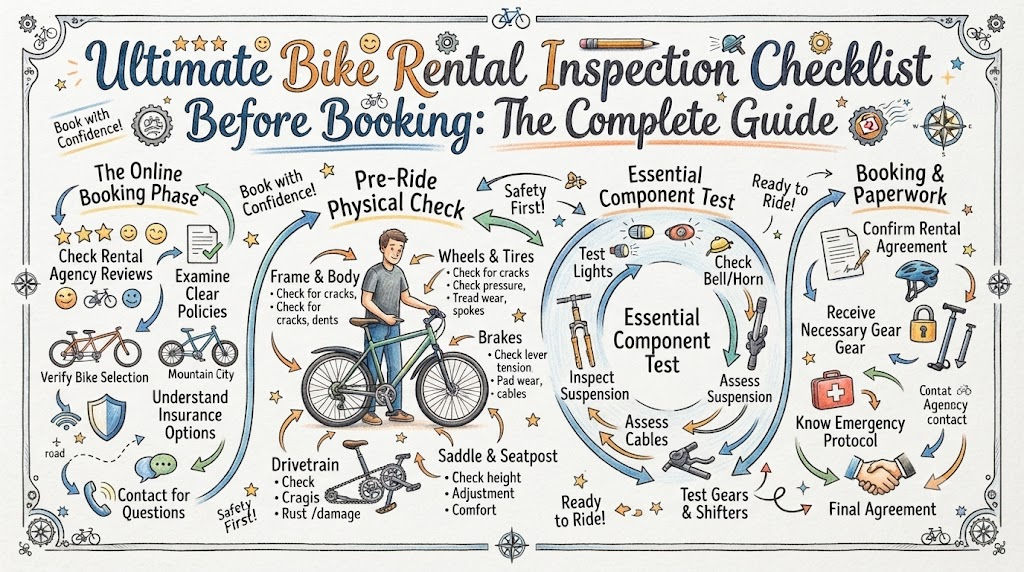
Never sign a contract or leave the pickup point without executing a thorough physical and mechanical inspection. Use this targeted checklist to review the vehicle:
Vehicle Condition
Walk around the vehicle in bright daylight. Inspect the body panels for deep scratches, dents, structural cracks, or structural misalignments. Take clear, high-resolution photographs and videos covering all angles of the two-wheeler. This visual evidence protects you against pre-existing damage claims when returning the vehicle.
Fuel Policy
Confirm whether the provider operates on a full-to-full basis, a point-to-point tank measurement, or a dry-tank policy. Ensure the current fuel level matches the exact reading noted on your physical rental receipt.
Insurance Coverage
Verify that the bike carries valid third-party insurance or comprehensive vehicle insurance coverage. Review the document expiration dates to ensure you remain fully protected against liability in the event of an accident.
Mileage Limits
Ask if your rental package features unlimited kilometers or enforces a fixed daily limit. Clarify the precise per-kilometer surcharge rates for exceeding the agreed limit to prevent surprises on your final bill.
Helmet Availability
Safety remains a top priority. Confirm that the rental includes a sturdy, clean, and properly fitting helmet that complies with local safety standards. If you plan to travel with a passenger, verify the availability of a secondary pillion helmet.
Rental Agreement Terms
Read the fine print of the contract carefully. Pay attention to penalty clauses regarding late returns, breakdown liabilities, out-of-state travel permissions, and cleaning fees.
Safety Tips for Riding a Rental Bike in India
Riding a bike on rent in India requires careful attention and defensive driving habits. Follow these essential safety protocols to ensure a safe journey:
- Follow Traffic Rules: Observe local traffic signals, avoid lane splitting at high speeds, and watch out for regional road signs.
- Wear a Helmet: Keep your helmet securely fastened at all times while the engine is running.
- Avoid Overspeeding: Adapt your travel speed to match local road patterns, unexpected pedestrian movements, and changing traffic density.
- Check Weather and Road Conditions: Sudden seasonal rain or unpaved sections can drastically reduce tire traction. Exercise extra caution on wet or gravel-strewn surfaces.
- Keep Emergency Contacts Handy: Save the direct customer care numbers of your vehicle provider alongside local roadside assistance and medical emergency contacts on your mobile phone.
Cost of Bike Rental in India
Rental rates vary based on your choice of vehicle class, engine capacity, and the specific rental city. The table below outlines standard market pricing trends:
| Vehicle Segment | Average Daily Price Range (INR) | Primary Intended Use |
| Scooters | INR 300 to INR 600 | Short inner-city commutes, local sightseeing, and quick market runs. |
| Commuter Bikes | INR 400 to INR 700 | Economical daily office travel and intra-city transits. |
| Premium / Sports Bikes | INR 800 to INR 1,800 | Highway cruising, weekend leisure rides, and performance riding. |
| Adventure Bikes | INR 1,200 to INR 2,500 | Long-distance touring, mountain travel, and off-road exploration. |
Common Mistakes First-Time Travelers Should Avoid
Avoiding these frequent oversights helps ensure a smooth, stress-free rental experience:
- Skipping the Pre-Ride Check: Failing to inspect brakes, tire treads, and lighting systems before leaving the lot can compromise your safety on the road.
- Ignoring Document Verification: Operating a vehicle without confirming that the registration certificate, pollution certificate, and insurance papers are valid can result in costly law enforcement fines.
- Failing to Document Existing Scratches: Neglecting to photograph pre-existing dents or body damage leaves you vulnerable to unfair repair charges upon vehicle return.
Bike Rental vs Public Transport vs Taxi
Choosing the right transit method depends on balancing cost, flexibility, and comfort. The comparison table below highlights how these modes compare across key travel metrics:
| Feature Metric | Two-Wheeler Rental | Public Transport (Metro/Bus) | Commercial Taxi Services |
| Cost | Highly affordable daily rates | Lowest overall pricing | Highest cost due to distance and time surcharges |
| Convenience | High; pick up and ride at your convenience | Low to moderate; limited by fixed routes and timetables | High; point-to-point service but vulnerable to traffic delays |
| Flexibility | Maximum; change routes or stop anytime | Minimum; rigid stops and pre-planned schedules | Moderate; dependent on driver willingness and route changes |
| Comfort | Good for solo travelers or couples | Low during peak congestion hours | High; climate-controlled seating |
| Travel Experience | Immersive and adventurous | Standard utilitarian commute | Isolated from local surroundings |
| Best Use Cases | Sightseeing, exploring dense urban environments, and flexible daily commutes | Strict budget travel along major metro or bus routes | Heavy luggage transfers, adverse weather travel, or late-night airport transits |
How MotoShare India Can Help Travelers
When looking to rent a bike in India, MotoShare India provides a modern, transparent vehicle rental in India through its efficient peer-to-peer vehicle sharing platform. Operating via motoshare.co, the marketplace connects local vehicle owners directly with verified renters, bypassing traditional rental agency markups.
Easy Online Booking
The user-friendly interface allows you to select your travel dates, browse available options near your location, and secure a reservation in just a few clicks.
Wide Range of Vehicles
The platform accommodates diverse travel needs, offering agile city scooters, fuel-efficient commuter models, premium sports motorcycles, and rugged cruisers tailored for highway touring.
Transparent Pricing
MotoShare operates on an open pricing model with no hidden service charges, booking commissions, or unannounced fees, ensuring you know exactly what you are paying for upfront.
Verified Vehicle Owners
Every two-wheeler hosted on the platform comes from a verified local owner, ensuring regular maintenance, clear documentation, and vehicle reliability.
Flexible Rental Options
Whether you need a daily commuter scooter for Bangalore, a weekend cruiser for Goa, or a long-term bike rental for tourists on extended holiday tracks, the platform offers adaptable rental terms.
Availability Across Indian Cities
Expanding across key travel hubs, the network connects you with reliable options in major cities including Delhi, Mumbai, Bangalore, Pune, Hyderabad, Chennai, and Kolkata.
FAQs
Can tourists rent a bike in India?
Yes, domestic and international tourists can easily secure a motorcycle rental India option. International visitors must provide a valid passport, visa, and an appropriate driving license.
Is an international driving permit required?
For foreign nationals, an International Driving Permit (IDP) alongside their original domestic driving license is required by law to legally operate a two-wheeler rental India vehicle.
How much does bike rental cost in India?
Daily rental rates generally start around INR 300 for basic automatic scooters and can scale up to INR 2,500 per day for premium adventure or touring motorcycles.
Are helmets provided?
Yes, reputable rental platforms provide at least one standard safety helmet with the vehicle. You can request an additional pillion helmet for a small fee if traveling with a passenger.
Can I rent a bike without a deposit?
Deposit terms depend on the specific vehicle owner or local host guidelines. Some options feature zero-deposit structures, while others require a small refundable security amount.
What happens if the bike breaks down?
If you encounter a mechanical issue, contact the vehicle owner or the platform’s support line immediately. Do not attempt major independent repairs without prior authorization.
Can I take the bike to another city?
Intercity travel policies vary by host. Many vehicles permit travel across neighboring regions, provided the bike carries valid statewide permits and matches the host’s geographic terms.
How do I verify vehicle document validity?
Always ask to view physical or digital copies of the Registration Certificate (RC), third-party or comprehensive insurance cover, and the active Pollution Under Control (PUC) certificate before starting your trip.
What should I do if I find damage during the inspection?
Point out any scratches, cracks, or worn components to the vehicle owner immediately, note them down in the rental checkout agreement, and take clear photos for your records.
Are fuel charges included in the rental price?
No, fuel costs are typically separate. Renters are responsible for refueling the vehicle during their trip and returning it with the same amount of fuel it had at pickup.
Conclusion
Renting a two-wheeler offers an efficient, affordable, and flexible way to experience the vibrant landscapes and rich cultures of India’s major cities and tourist routes. Following a detailed bike rental inspection checklist before booking helps you avoid unexpected rental disputes, protect your travel budget, and ensure a safe ride.
Taking the time to check mechanical components, document body conditions, and verify the vehicle’s paperwork makes a world of difference. When planning your next trip, visit MotoShare colombia at motoshare.co to browse high-quality, community-verified two-wheeler options that fit your travel needs and budget. Enjoy the open road and travel with complete confidence.
