Introduction
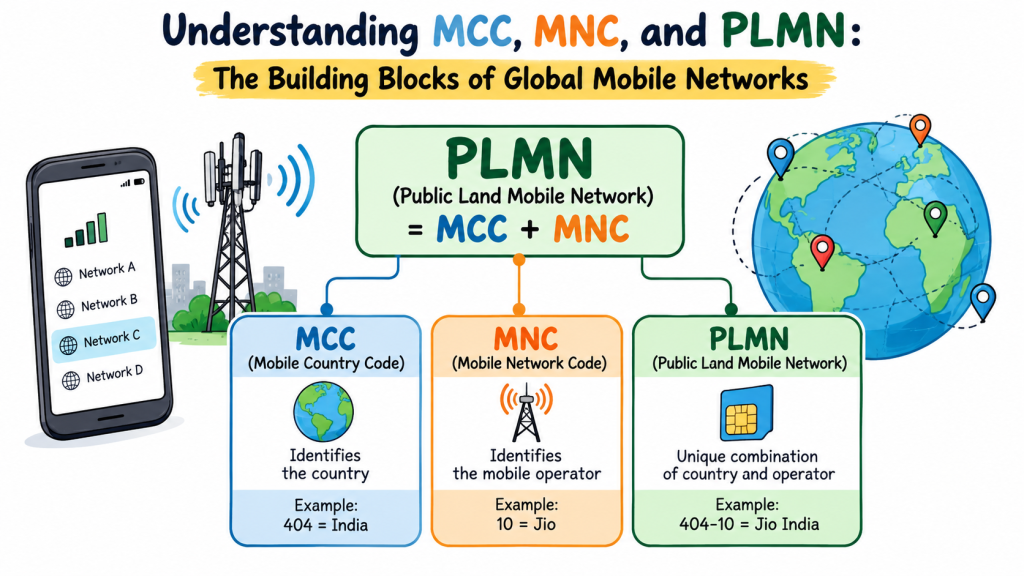
Mobile phones connect people across countries, cities, and continents. Behind each connection, mobile networks use specific identifiers to help devices recognize and access network services. Three important terms in this process are Mobile Country Code (MCC), Mobile Network Code (MNC), and Public Land Mobile Network (PLMN).
These identifiers help distinguish mobile networks from one another. They also support telecom research, network configuration, roaming analysis, and mobile operator identification. Although the terms often appear together, each serves a different purpose.
Understanding these codes can help telecom professionals, developers, researchers, and mobile technology users work with network information more confidently. This guide explains how MCC, MNC, and PLMN relate to each other, where people use them, and how to look up relevant network records. It also explains why accurate data matters when researching mobile operators and international connectivity.
Why Mobile Networks Need Unique Identifiers
A mobile device may encounter different networks while traveling, roaming, or searching for service. Network names alone do not always provide enough information to identify the underlying mobile network.
Telecom systems therefore use structured identifiers to distinguish networks and their assigned codes. These identifiers help devices and network systems recognize the network involved in a connection.
For example, two mobile operators may use similar commercial names in different countries. A network identifier helps researchers distinguish their records more precisely. It also helps telecom teams organize network information across countries and operators.
MCC, MNC, and PLMN provide different parts of this identification system. Understanding their relationship makes telecom databases easier to interpret.
What Is a Mobile Country Code (MCC)?
A Mobile Country Code, or MCC, identifies the country or geographic numbering area associated with a mobile network assignment. It contains three digits and forms part of the network identification structure used in mobile telecommunications.
Telecom systems use MCC values to help distinguish network assignments across different countries and territories. A database may store an MCC alongside country information, operator details, and other network identifiers.
However, an MCC does not identify a particular mobile operator on its own. Several operators may share the same MCC because they operate within the same country or numbering area.
Where MCC Data Helps
MCC information supports several common telecom tasks:
- Country-level network research: Helps organize mobile network records by their assigned country or numbering area.
- Operator directory management: Groups network records under the relevant MCC.
- Roaming analysis: Helps researchers understand the country component of a network identifier.
- Telecom software development: Supports systems that process mobile network identification data.
- Network troubleshooting: Helps technical teams inspect the identifiers that a device or network reports.
An MCC provides an important starting point, but researchers usually need an MNC to identify a specific network assignment.
What Is a Mobile Network Code (MNC)?
A Mobile Network Code, or MNC, identifies a mobile network within the relevant MCC context. It works alongside the MCC to distinguish a network assignment from other assignments associated with the same country or numbering area.
MNC values may contain two or three digits, depending on the applicable numbering plan. Researchers should preserve the format used by the authoritative record rather than assume that every MNC has the same length.
A common mistake involves treating an MNC as a complete identifier. An MNC generally needs its associated MCC to provide the correct context. The same MNC value can appear under different MCCs, so the number alone may not identify a network uniquely.
Why MNC Accuracy Matters
Telecom databases often contain multiple fields that describe a mobile operator. These may include the operator’s name, commercial brand, country, network codes, and service information.
The MNC helps distinguish network assignments, but it does not automatically confirm that a network currently provides service. Researchers should check assignment records and current operator information before drawing conclusions.
MNC data can support:
- Mobile operator research.
- Network inventory management.
- Telecom database development.
- Roaming and connectivity analysis.
- Network identification tools.
- Mobile technology testing and troubleshooting.
When a record contains both MCC and MNC, users can identify the network assignment more precisely than they can with either value alone.
How MCC and MNC Form a PLMN Identifier
A Public Land Mobile Network, or PLMN, refers to a mobile telecommunications network associated with a public land mobile service provider. In network identification, the term PLMN ID commonly refers to the identifier formed from an MCC and an MNC.
The MCC provides the country or numbering-area component. The MNC provides the network component within that context. Together, these values identify a particular network assignment within the relevant numbering structure.
Consider this illustrative example:
| Identifier field | Example value | Purpose |
|---|---|---|
| MCC | 234 | Illustrative country or numbering-area code |
| MNC | 15 | Illustrative mobile network code |
| PLMN ID | 234-15 | Combined identifier using the example values |
Important: These values illustrate the format only. They do not establish a current operator assignment or confirm that a network remains active.
Telecom systems may represent PLMN identifiers in different formats. Some records display the MCC and MNC with a separator, while technical systems may store or encode them differently. Users should check the format required by their database, device, or application.
MCC, MNC, and PLMN at a Glance
| Term | Full form | Main role | Key point |
|---|---|---|---|
| MCC | Mobile Country Code | Identifies the country or numbering-area component | Contains three digits |
| MNC | Mobile Network Code | Identifies a mobile network within the MCC context | May contain two or three digits |
| PLMN ID | Public Land Mobile Network Identifier | Combines MCC and MNC for network identification | Must preserve the correct MCC and MNC values |
These concepts work together, but they do not answer every question about network availability, coverage, or compatibility. Users must check additional information for those purposes.
How Mobile Network Identification Works
Mobile network identification involves more than displaying a carrier name on a phone. A device and the surrounding network systems use technical information to identify available networks and manage network access.
The precise process depends on the technology, device, network configuration, and service conditions. At a high level, network identification follows a practical sequence.
The Identification Process
First, a device detects available networks. Depending on its radio capabilities and surroundings, a mobile device may detect networks that it can attempt to access.
Next, the device or network system reads network identification information. Technical information can include the MCC and MNC associated with a network.
Then, the system interprets the identifier. The combined values help distinguish the relevant network assignment from other assignments.
Finally, the device and network apply their access rules. Network selection and service access depend on more than the identifier. Subscription permissions, roaming agreements, radio compatibility, network availability, and other technical conditions may affect the outcome.
This distinction matters because identifying a network does not guarantee access to it. A directory entry cannot, by itself, prove that a user can connect to a network at a particular location.
Where Telecom Teams Use MCC, MNC, and PLMN Data
Network identifiers serve several practical purposes across the telecommunications industry. Their value depends on the quality of the underlying records and the way a team uses them.
Mobile Network Operator Directories
Telecom directories organize operator records using structured identifiers. A directory can help users compare network assignments, review country information, and distinguish operators with similar names.
Researchers should still verify important records against authoritative assignment information. A directory provides a useful starting point, but users should check the record’s source and update status before relying on it for critical work.
Roaming Research
International roaming involves relationships between a subscriber’s home network and networks in other countries. MCC and MNC information can help researchers identify the networks involved in a roaming arrangement.
However, an identifier alone does not confirm that two operators have a working roaming agreement. Users need current service information or confirmation from the relevant providers.
Mobile Network Testing
Developers and telecom engineers may inspect network identifiers while testing devices, applications, and network configurations. Correct MCC and MNC values help teams identify the network context associated with a test.
Teams should also record the test environment, device, location, and relevant network conditions. These details help prevent an identifier from being mistaken for proof of a broader service issue.
Telecom Data Platforms
Telecom data platforms may combine network codes with country names, operator records, network technologies, and other fields. This structure helps users search and compare records more efficiently.
A well-maintained database should distinguish confirmed information from incomplete, outdated, or unverified records. It should also preserve the original identifier values so that users can trace each record back to its source.
eSIM and Connectivity Research
People researching eSIM services often need to understand which mobile networks support a particular service. MCC, MNC, and PLMN data can help them investigate network assignments and relationships.
Still, an eSIM brand does not necessarily operate its own radio network. Some providers offer connectivity through partner networks, and the available network can vary by country, plan, device, and commercial arrangement.
Users should check the provider’s current coverage and compatibility information before purchasing or activating a service.
How to Look Up MCC, MNC, and PLMN Codes
A reliable lookup process starts with a clear goal. You may want to identify a mobile operator, verify a network assignment, research a country, or investigate a code found in a device log.
The following steps can help you approach each task systematically.
Step 1: Define the Information You Need
Decide whether you need a country code, a network code, a complete PLMN identifier, or a broader operator profile.
If you already have an MCC and MNC, search for the combined identifier. If you only have an operator name, look for a reliable directory that connects operator records with their assigned network codes.
Step 2: Search a Structured Telecom Directory
Use a directory that organizes mobile network information by country, operator, MCC, MNC, or PLMN. Search tools can reduce the time needed to find a relevant record.
For example, eSIMGlobo is an independent global telecom directory focused on researching mobile network operators and their identifiers. It can serve as a starting point for exploring relevant telecom records.
Always review the information available for the specific record. Do not assume that every directory contains every assignment or offers the same level of detail.
Step 3: Check the Full Identifier
Compare the MCC and MNC together. Do not identify a network from the MNC alone, and do not assume that a familiar operator name proves a code assignment.
Preserve leading zeros where the relevant format requires them. Also, check whether the source stores the MNC as a two-digit or three-digit value.
Step 4: Verify the Assignment
For important research, compare the directory entry with an authoritative numbering or assignment source. The relevant authority depends on the type of record and the applicable telecommunications framework.
Check whether the record includes an assignment date, status, or other context. If the source does not provide enough information to confirm a detail, treat that detail as unverified.
Step 5: Record the Source and Context
Keep the source name, retrieval date, identifier format, and any important limitations with your research notes. This practice helps other users understand where the information came from.
For ongoing projects, establish a process for reviewing records that may change. A lookup result should not become a permanent assumption without suitable verification.
What to Check When Comparing Telecom Records
Two records may look similar while representing different types of information. Before comparing them, identify what each record actually describes.
| Data field | What it tells you | What it does not prove |
|---|---|---|
| Country or territory | The geographic context associated with the record | Actual coverage at a specific location |
| MCC | The country or numbering-area component | The identity of a specific operator by itself |
| MNC | The network code within the relevant MCC context | Current service availability |
| PLMN ID | The combined network identifier | A working roaming agreement |
| Operator name | The organization or operator described by the record | That the operator owns every brand using its services |
| Commercial brand | The name customers may recognize | Ownership of the underlying mobile network |
| Record status | The status stated by the data source | Live network operation unless the source establishes it |
| Source and update date | Where the record came from and when the source updated it | Complete accuracy without further validation |
This comparison helps prevent common errors in telecom research. It also makes a database more useful for people who need to distinguish identifiers from commercial or operational details.
Common Errors in MCC and MNC Research
Small data mistakes can create confusion in telecom directories, testing tools, and technical reports. The following problems deserve particular attention.
Using an MNC Without Its MCC
An MNC value alone may match multiple records. Always consider the MCC and MNC together when identifying a network assignment.
Removing Leading Zeros
A data-processing system may accidentally remove a leading zero when it treats an identifier as a number. Store identifiers in a format that preserves the required digits.
Assuming a Code Confirms Coverage
A valid network assignment does not guarantee coverage in every location. Check current coverage information and the conditions that affect service.
Confusing an Operator With a Brand
A commercial brand may use another company’s network. Confirm the relationship between the brand, operator, and network assignment instead of treating them as interchangeable.
Treating Old Records as Current
Telecom records can change, and older information may not reflect the current status. Review the source date and verify important assignments before using them in a report or product.
Assuming Every Directory Uses the Same Format
Different systems may display, store, or encode identifiers differently. Check the format rules before importing data or comparing records from separate sources.
Data Quality, Verification, and Privacy
Reliable telecom research requires more than collecting codes. It also requires a clear approach to data quality, record history, and responsible use.
Keep Identifier Fields Consistent
Store MCC and MNC in separate fields when your database design supports it. This structure makes it easier to validate each value, build search filters, and generate a combined PLMN identifier when needed.
Avoid changing identifier values just to make records look consistent. Apply formatting rules carefully and preserve the source values when possible.
Track Data Sources
A directory becomes more useful when users can understand where its records came from. Source details help researchers investigate discrepancies and decide when they need further confirmation.
When sources disagree, do not silently choose the value that looks most familiar. Check the relevant authority, record date, assignment context, and formatting rules before resolving the difference.
Review Updates Regularly
The appropriate review schedule depends on the use case. A research project may need occasional checks, while a production system may require a more formal data maintenance process.
Define which fields matter, how your team will detect changes, and who will verify them. This approach reduces the risk of outdated information spreading through dependent systems.
Protect Sensitive Information
MCC and MNC assignments are network identifiers, not personal subscriber identifiers. However, systems that collect network information may also process device logs, location details, account data, or other sensitive information.
Apply suitable access controls and data-retention practices to those associated records. Collect only the information your project needs, and follow applicable privacy and security requirements.
How eSIMGlobo Fits Into Telecom Research
Finding reliable mobile network information can take time when records appear across different sources. A structured telecom directory can make that research more convenient by bringing relevant network information into an organized reference point.
eSIMGlobo focuses on researching mobile network operators, MCC, MNC, and PLMN identifiers. Users can consider it as a starting point when exploring network records or investigating an identifier.
As with any directory, researchers should review the details available for a particular entry and confirm important facts against appropriate authoritative sources. A directory lookup should support verification, not replace it.
For projects involving eSIMs, roaming, or network compatibility, combine identifier research with current provider documentation. That extra step helps distinguish an assigned network code from a service that a customer can actually use.
Frequently Asked Questions
1. What does MCC mean in mobile telecommunications?
MCC stands for Mobile Country Code. It contains three digits and identifies the country or numbering-area component associated with a mobile network assignment.
2. What does MNC mean?
MNC stands for Mobile Network Code. It identifies a mobile network within the relevant MCC context, so researchers should generally consider both codes together.
3. What is a PLMN ID?
A PLMN ID identifies a Public Land Mobile Network in a mobile telecommunications context. The identifier commonly combines the MCC and MNC.
4. Are MCC and MNC the same thing?
No. The MCC provides the country or numbering-area component, while the MNC identifies the network within that context. Together, they form the basis of a PLMN identifier.
5. Can an MNC identify a mobile operator by itself?
An MNC alone may not uniquely identify a network because the same value can appear under different MCCs. Use the complete identifier and verify the related assignment record.
6. Does a valid PLMN ID guarantee mobile coverage?
No. A valid identifier does not guarantee coverage, network access, or service availability. Those outcomes depend on additional factors, including network deployment, device compatibility, subscription permissions, and service arrangements.
7. Why can MNC values contain different numbers of digits?
MNC formats can use two or three digits, depending on the applicable numbering plan. Researchers should preserve the format shown in the relevant authoritative record.
8. How can I verify an MCC or MNC assignment?
Start with a structured telecom directory, then compare the record with an appropriate authoritative numbering or assignment source. Review the source date and any status information before relying on the result.
9. How do MCC and MNC relate to eSIM services?
These identifiers can help researchers investigate the mobile networks associated with eSIM connectivity. However, the codes alone do not confirm which networks a particular eSIM plan supports, so users should check current provider information.
10. Where can I research mobile network identifiers?
An organized telecom directory such as eSIMGlobo can help users explore mobile operator information and MCC, MNC, and PLMN records. For important technical or business decisions, verify relevant details against authoritative sources.
Conclusion
MCC, MNC, and PLMN identifiers help distinguish mobile networks within the global telecommunications system. The MCC provides the country or numbering-area component, while the MNC identifies a network within that context. Together, they form the basis of a PLMN identifier.
These codes support telecom directories, network testing, roaming research, and mobile connectivity analysis. However, an identifier does not confirm coverage, active service, or compatibility on its own.
For accurate results, check the complete identifier, preserve its format, and review the source behind each record. Use directories such as eSIMGlobo to support your research, then verify important details before making technical or business decisions.
